The update | 25 February 2026
Nigeria’s communications ministry announced approval of a $100 million EBRD investment for Project BRIDGE, alongside a €22 million EU grant dedicated to the project. Its statement also refers to $500 million in World Bank financing. These are announced financing approvals; they do not establish that all funds have been disbursed or construction completed. [11]
History and intended function
The World Bank’s October 2025 announcement describes a $1.6 billion project to deploy more than 90,000 kilometres of fibre through a majority privately owned and operated vehicle. Fibre forms the high-capacity backbone on which local access services can depend. The intended expansion is a project target, not a verified inventory of finished cables. [12]
Where the 2026 evidence points
The ministry’s 2026 investor pre-qualification notice outlines a public-private structure and coverage ambitions across the states and FCT. [13] A World Bank procurement-plan record dated 22 September 2026 provides a later administrative update. Its existence does not, by itself, prove physical completion or that a tender is currently open. [14]

Statement from the source
Minister Bosun Tijani described the approvals as “deeply reassuring” in the ministry’s February announcement, linking them to partnerships required for nationwide deployment. This reports his stated confidence, not an independent assessment of delivery performance. [11]
Benefits and limits
More reliable connectivity could support remote work, cloud applications, digital sales and technical support. However, a national backbone does not automatically deliver affordable service to an individual shop. Last-mile networks, power, service competition, pricing and customer equipment all influence the experience. These are practical considerations, not promises of a particular return.
TANEVOR view
Build services around useful outcomes: reliable office networks, secure device setup, backups, maintenance and staff guidance. For an Ilorin SME, reducing lost working hours may create more immediate value than adopting several new apps at once. Publish clear packages with scope, support terms and a way to measure whether the work helped.
What readers should watch
Track delivery milestones, local coverage and service prices. TANEVOR has no claimed BRIDGE contract or partnership in this issue. Opportunity analysis should not be mistaken for an award, a government endorsement or guaranteed revenue.
EXPLAINER
From a national backbone to a working shop
A nationwide fibre project is important infrastructure, but an individual business experiences connectivity through its local service. Understanding that chain helps a company ask better questions about reliability and practical benefit.
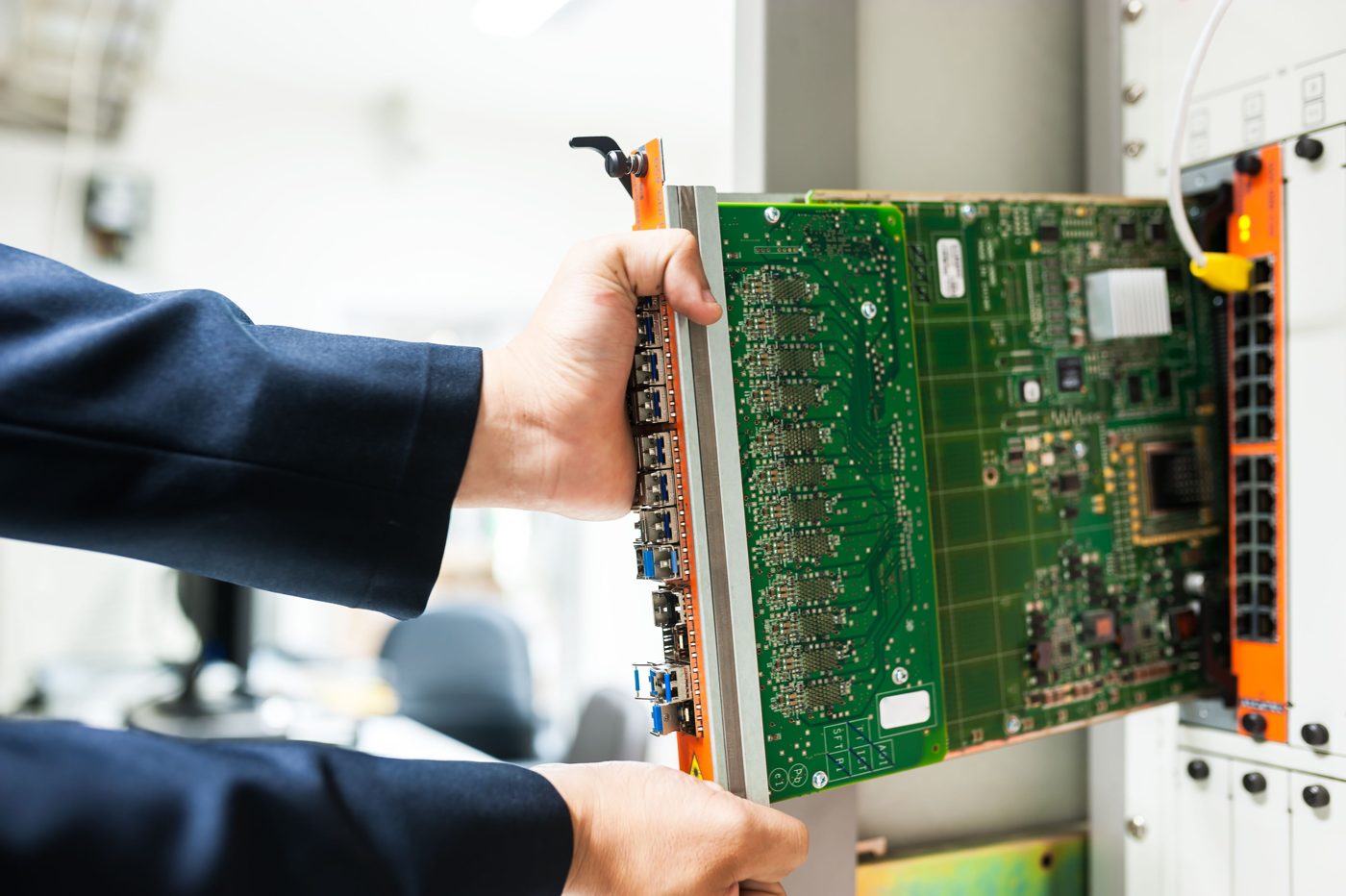
Several links must work
The backbone connects areas at high capacity. Local access networks connect premises or nearby service points. The shop then depends on its router, internal network, power and user devices. A problem at any of these stages can affect the customer’s experience, so a slow application is not automatically proof of a backbone fault.
What BRIDGE evidence means
The financing announcements describe approved support and intended expansion. The procurement record is an administrative update. [11][14] These are useful signs of project development, but they do not establish that a particular Ilorin address has a new service or that TANEVOR has received a contract.
Connect infrastructure to a workflow
A business may benefit through faster file transfer, more dependable communication, cloud access or digital sales. The benefit becomes more concrete when tied to a task. For example, a reliable connection may allow staff to finish an online order process without restarting it several times.
Evaluate the full requirement
Consider coverage, actual performance at the premises, support access, installation requirements and power needs. Confirm current offers directly with the relevant provider before purchase. Our view is to assess the connection as part of a working business system, with responsibilities and expected performance clearly described.
PRACTICAL GUIDE
A productivity example for an SME
This hypothetical example turns a broad claim about digital transformation into something a small business can measure. It does not estimate a guaranteed return from BRIDGE or describe a TANEVOR customer.
Choose one recurring task
Suppose staff process 20 customer orders per week. Under the current method, each order needs 12 minutes of administration; a revised method needs eight minutes. If both figures are observed under comparable conditions, the saving is four minutes per order, or 80 minutes per week.
Check what changed
The improved method may involve a clearer form, a reliable connection, fewer duplicate entries or better staff guidance. Do not attribute the full benefit to one new app without checking. Count corrections and failed orders too: a shorter process that creates more mistakes may not be a useful improvement.
Compare a complete period
Track the task before and after the change over enough ordinary working days to see variation. Use the same definition of a completed order. Record unusual interruptions and the time required to maintain the new method. The 80-minute figure above is arithmetic from stated assumptions, not measured business evidence.
Build a service around the outcome
A technical service could offer an assessment, a documented improvement and a follow-up check. State what is included and what the customer must provide. Useful evidence might show fewer interruptions, lower correction rates or time saved on a defined task. Clear, modest results are easier to assess than an unsupported promise of transformation.
Sources & further reading
Research checked for this issue on 5 October 2026. Publication dates refer to the source; practical examples are labelled in the text.
- Federal Ministry of Communications, Innovation and Digital Economy
BRIDGE: $100 million EBRD investment and €22 million EU grant ↗
25 February 2026 - World Bank
New financing to enhance Nigeria’s digital infrastructure and health security ↗
7 October 2025 - Federal Ministry of Communications, Innovation and Digital Economy
Project BRIDGE: investor pre-qualification notice ↗
2026 notice; read for project structure, not live tender status - World Bank
BRIDGE - P508383: Procurement Plan ↗
22 September 2026
Work photographs are representative examples of the activity described. They are not evidence of a specific TANEVOR, NVIDIA, FAO or BRIDGE project. Product photographs show the model identified in their captions.