The update | 31 May 2026
NVIDIA said its Vera Rubin platform was ramping into full production, with system manufacturers building equipment for large AI deployments. The company describes five coordinated racks that combine processing, networking and storage. It claims ten times the agent throughput of its previous Grace Blackwell platform at scale. This is a manufacturer claim, rather than an independently verified result for every workload. [1]
How we arrived here
The January 2026 Rubin announcement centred on six coordinated chips. By May, NVIDIA was describing a broader factory-scale system. The shift matters: improving one processor alone cannot solve delays caused by moving data between processors, memory and storage. The January and May announcements describe stages of the platform, so their component descriptions should not be treated as identical. [1][2]
What it does
Agentic AI can retrieve information, call software tools and carry out several linked tasks. A customer-support workflow, for example, might search a knowledge base, check an order and prepare a response. That example illustrates the workload; it is not a reported TANEVOR deployment.

Statement from the source
“One prompt can launch a thousand-step journey of reasoning, retrieval, tool use and response generation.” - Jensen Huang, NVIDIA founder and CEO, 31 May 2026. [1]
Benefits and limits
Faster processing can make complex AI services more responsive and expand what developers can offer. However, speed does not establish accuracy. Businesses still need access controls, reliable source data and a way to review consequential outputs. A faster system can also repeat an incorrect assumption more quickly.
TANEVOR view
For Nigerian SMEs, the useful question is which repetitive task AI can improve today. Start with a narrow workflow such as drafting product descriptions or organising support requests. Measure time saved, correction rate and service cost before expanding. Most small businesses will access this infrastructure through software or cloud providers; buying a data-centre platform is not a necessary first step.
What readers should watch
Look for independent workload tests, actual service availability and total operating cost. Production announcements show supplier progress, but do not prove that a specific Nigerian cloud service is already using Rubin. This article makes no such availability claim.
EXPLAINER
How an AI service actually works
A useful way to understand an AI service is to follow one task from the person asking the question to the final response. The visible chat window is only the interface. Behind it are software, stored information, computing resources and rules controlling what the system may access.
The chain behind one request
Imagine an employee asking, “Which customer orders still need delivery?” A useful system must identify the authorised user, retrieve the relevant records, interpret their status and present an answer. If it can make changes, it also needs clear boundaries on actions. This is an illustrative workflow, not a description of a specific Rubin customer.
Why several kinds of hardware matter
Processors perform calculations, memory holds data needed during work, and storage retains information beyond a running task. Networking lets the machines exchange information. NVIDIA’s January and May announcements describe a coordinated platform rather than a processor operating alone. Their performance figures remain manufacturer claims for the workloads and comparisons stated. [1][2]
Training and use are different stages
Training develops a model from data. Inference is the stage at which a trained model responds to new input. An agent workflow may involve several inference steps, retrieval operations and tool calls. That is why a short user prompt can require much more work behind the scenes than its length suggests.
The practical lesson
A faster computing platform can improve throughput, but it cannot repair inaccurate customer records or unclear instructions. The quality of an AI service depends on the whole chain. Our editorial position is to judge the complete workflow: correct outcome, reliable access, manageable cost and a clear route for human review.
PRACTICAL GUIDE
A small business AI pilot
This worked example is hypothetical. A device shop wants help drafting replies to common customer questions. The goal is to reduce repetitive typing while keeping prices, product condition and warranty information accurate.
Start with approved information
Prepare a short, current knowledge sheet containing opening hours, service categories, contact details and approved wording for guarantees. Keep individual customer records separate. Give the assistant only the information needed for its task, and require a person to approve each outgoing reply during the pilot.
Test realistic cases
Include easy questions, unclear questions and requests the business cannot answer yet. For example, “Do you have this laptop today?” requires current stock information. A good response should ask for confirmation when that information is missing. A polished reply that invents availability is a failed test.
Measure the result
For a sample of 40 enquiries, record how many drafts were usable without editing, how many needed corrections and how much time staff spent reviewing them. If 30 drafts were usable, that is a 75% acceptance rate in this example. It is not an industry benchmark or a TANEVOR result. Compare the entire review process with the previous method.
Decide what comes next
Expand only when the workflow produces an observable benefit. A drafting assistant may be useful before an assistant that changes orders or handles payments. Document who owns the information, who checks updates and how staff handle failures. Useful automation should make a small process more dependable as well as faster.
Sources & further reading
Research checked for this issue on 5 October 2026. Publication dates refer to the source; practical examples are labelled in the text.
- NVIDIA
Vera Rubin Ramps Into Full Production to Power Agentic AI Factories Worldwide ↗
31 May 2026 - NVIDIA
Rubin: Six New Chips, One AI Supercomputer ↗
5 January 2026
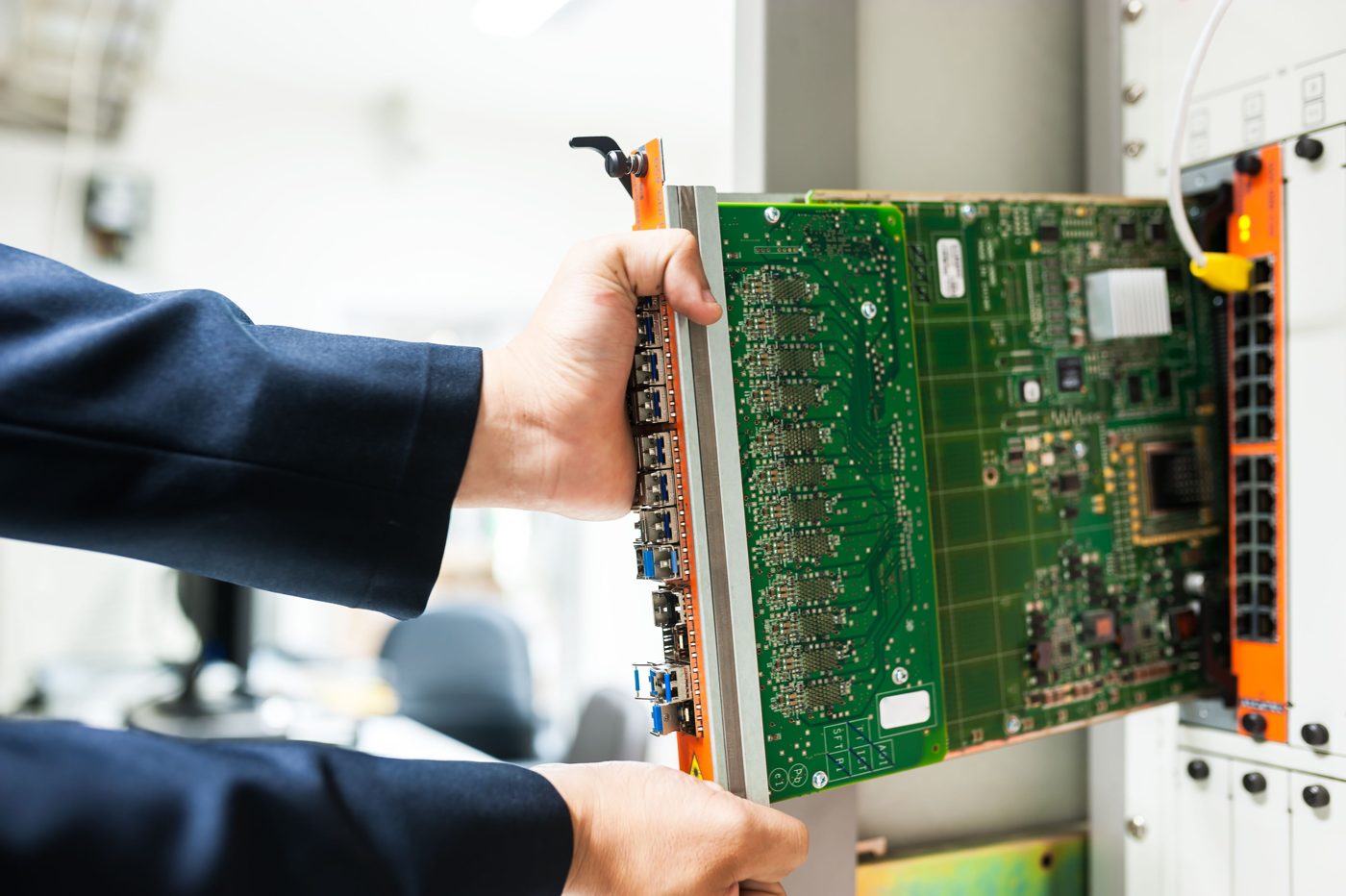
Work photographs are representative examples of the activity described. They are not evidence of a specific TANEVOR, NVIDIA, FAO or BRIDGE project. Product photographs show the model identified in their captions.